Industrial and construction sites present a unique set of hazards that require rigorous safety protocols. Among the most vulnerable parts of the body are the eyes, which are susceptible to impact, dust, chemicals, and radiation. For workers who require vision correction, the challenge is twofold: maintaining clear vision while ensuring maximum protection. Relying on standard corrective lenses or fitting bulky goggles over glasses is often an inadequate solution. The most effective approach is utilizing dedicated prescription safety eyewear designed specifically for these high-risk environments. This article examines the necessity of certified safety glasses, the standards that govern them, and the specific features that make them essential gear for the modern job site.
Understanding the Hazards of the Job Site
The first step in selecting appropriate protective gear is understanding the specific threats present in construction and industrial sectors. Statistics consistently show that a significant percentage of workplace eye injuries occur because workers are either not wearing eye protection or are wearing the wrong kind.
- Impact Hazards: Construction sites are dynamic environments where flying debris is common. Nails, wood splinters, metal shards, and concrete chips can travel at high velocities. Standard streetwear glasses are typically made of glass or CR-39 plastic, which can shatter upon impact, potentially causing severe ocular trauma. Safety eyewear is engineered to withstand high-mass and high-velocity impacts without shattering.
- Dust and Particles: Industrial work often generates fine particulate matter. Sawdust, cement dust, and drywall particles can easily bypass standard frames, causing irritation or corneal abrasions. Safety frames tailored for these environments often feature foam gaskets or wrap-around designs to seal the gap between the face and the lens.
- Optical Clarity and Fatigue: In precision work, clarity is synonymous with safety. If a worker has to strain to read a blueprint or gauge a measurement because of fogged lenses or poor prescription accuracy, accidents are more likely to occur.
The Importance of Prescription Safety Eyewear Standards
When selecting gear, one must look beyond the appearance of durability and verify the certifications. In North America, the two primary standards to look for are ANSI Z87.1 (United States) and CSA Z94.3 (Canada).
- ANSI Z87.1: This standard defines the criteria for safety glasses to resist impact, non-ionizing radiation, and chemical exposure. Frames and lenses marked with Z87 or Z87+ (indicating high-impact rating) have undergone rigorous testing. This includes dropping a weighted ball on the lens and firing a steel ball at high speed to ensure the lens stays intact and in the frame.
- CSA Z94.3: This is the Canadian standard for eye and face protectors. It classifies hazards and outlines the appropriate protection for each. For Canadian job sites, adhering to CSA standards is often a regulatory requirement.
When you purchase prescription safety glasses, you are investing in a medical device that also serves as a shield. The lens material, typically polycarbonate or Trivex, is naturally impact-resistant and filters out harmful UV rays, which is critical for outdoor construction work.
Why Fit and Comfort Drive Compliance
A major issue on industrial sites is non-compliance. Workers often remove safety glasses because they are uncomfortable, distort vision, or fog up. This is where high-quality prescription safety eyewear proves its value. Unlike over-the-glass goggles, which can be heavy and press against the temples, prescription safety frames are designed for all-day wear.
Properly fitted eyewear stays in place when a worker is looking down or moving quickly. Features like rubberized nose pads and temple tips ensure grip even when sweating. Furthermore, advanced lens coatings are essential. Anti-fog coatings are particularly important in construction, where workers move between different temperature zones, or when physical exertion causes body heat to rise. If a worker has to remove their glasses to wipe off fog constantly, they are exposing their eyes to hazards during that interval.
Recommended Eyewear for Industrial Applications
RX Safety Canada offers a curated selection of frames that meet the rigorous demands of industrial work. Below are five top-tier options that combine certification with functionality.
Augusta Prescription Safety Glasses
The Augusta model is a robust choice for environments requiring sealed protection. These glasses bridge the gap between standard spectacles and goggles. They are ANSI Z87.1 certified, making them suitable for high-impact zones. The design includes a strap option, which is excellent for tactical or active construction tasks where head movement is frequent. The seal helps prevent dust and fine particles from entering the eye area.
Matrix Peak Prescription Safety Glasses
For workers in Canada specifically, the Matrix Peak is a standout option because it carries both ANSI Z87.1 and CSA Z94.3 certifications. This dual certification ensures compliance across North American job sites. The frame is designed for durability and coverage, providing extensive protection around the orbital bone. It is an ideal choice for general construction and heavy industrial manufacturing.
Matrix Upton Prescription Sports Safety Sunglasses
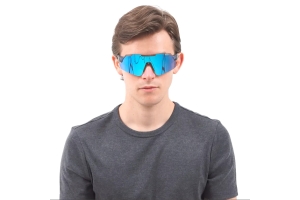
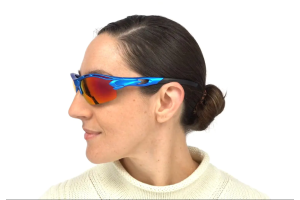
Construction work is often performed outdoors in bright conditions. The Matrix Upton offers a wrap-around style that is popular in sports but engineered for industrial safety. The black frame reduces glare, and the wrap design provides excellent peripheral coverage. These are suitable for site managers and operators who need to reduce eye strain from the sun while maintaining full impact protection.
Matrix Marion Prescription Safety Glasses
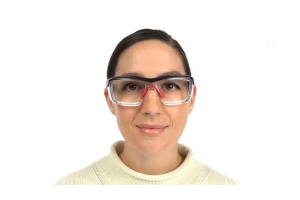
The Matrix Marion offers a clear, no-nonsense aesthetic that functions well in indoor industrial settings or low-light conditions. Certified to ANSI Z87.1 standards, these glasses provide high visibility and protection without obstructing the field of view. The clear frame design is often preferred in tactical or precision engineering environments where peripheral awareness is crucial.
Hornell Prescription Safety Glasses
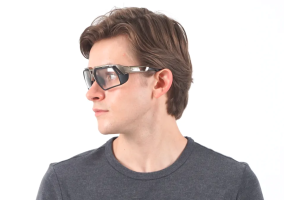
The Hornell Prescription Safety Glasses are built for rugged endurance. Featuring a black and grey design, it offers a professional look while adhering to ANSI Z87.1 standards. The construction of the frame is focused on longevity, capable of withstanding the rough handling typical of a construction site. It provides substantial side protection, which is vital for deflecting debris coming from oblique angles.
Ordering Prescription Safety Glasses Online
The process of equipping a workforce or an individual with proper eye protection has become significantly more streamlined. Today, you can order prescription safety glasses online with precision and ease. This method allows access to a wider range of frame styles and lens options than what might be available at a local optical dispensary.
When ordering online, it is important to have a current prescription and a measurement of your Pupillary Distance (PD). This ensures that the optical center of the lenses aligns correctly with your eyes, preventing eye strain. Platforms like RX Safety Canada allow for customization of lens features, such as adding transition lenses that darken in sunlight, or blue light blocking coatings for engineers working with screens on-site.
Conclusion
Investing in high-quality prescription safety eyewear is an investment in long-term health and productivity. By choosing frames that meet ANSI and CSA standards, workers ensure they are shielded from the specific hazards of their trade. RX Safety Canada stands as a premier resource for these specialized products, delivering the precise optics and rugged durability required to keep professionals safe on the job. Whether dealing with heavy machinery, framing a house, or managing a tactical operation, the right eyewear is an essential tool for the task at hand.