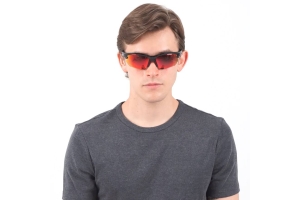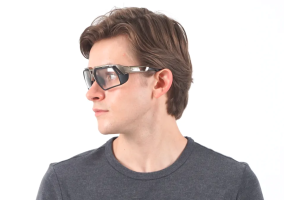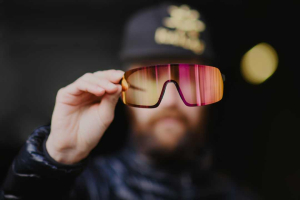
If you're considering buying prescription sunglasses, you're likely asking the practical question: how much are prescription sunglasses? It's a fair question. These aren't your typical off-the-shelf shades. They combine vision correction with UV protection, often customized to your exact prescription, style preferences, and lifestyle needs. All of that comes at a cost — but how much, exactly?
This article breaks down the price of prescription sunglasses, explains the factors that influence what you'll pay, and helps you understand what you're really getting for your money.
Average Cost of Prescription Sunglasses
The prescription sunglasses cost can vary widely, ranging anywhere from $100 to over $500. The average price tends to fall between $200 and $400, depending on several key variables. These include the complexity of your prescription, the lens material, coatings, frame style, and any special features.
In some cases, a simple pair with single-vision lenses and basic plastic frames can come in under $200. However, premium lenses, designer frames, and advanced coatings can quickly double or even triple that base cost. Understanding where your needs fall on this spectrum is the key to budgeting wisely.
Let’s unpack each of these cost factors in detail.
1. Prescription Complexity
The strength and type of your vision correction significantly affect the price of prescription sunglasses. If you have a mild single-vision prescription, you'll likely pay on the lower end of the range. However, if you need progressive lenses or have a high-index prescription (for stronger vision correction), that pushes the cost higher.
Progressive lenses, which correct vision at multiple distances, require more precise manufacturing and typically add $100 to $200 to the base cost. Bifocals and occupational lenses also fall into this category and increase both production time and overall price.
Astigmatism or prism corrections, although less common, may require additional lens adjustments, contributing further to the total price. The more complex the optical need, the more expensive the lens crafting process becomes.
2. Lens Material
Not all lenses are made the same. The type of lens you choose impacts both performance and price. Standard plastic lenses are the most affordable. Polycarbonate lenses, known for their durability and impact resistance, are slightly more expensive.
High-index lenses, which are thinner and lighter for strong prescriptions, can add another $100 or more. The lens material you select should match both your prescription needs and how you plan to use the sunglasses.
Polycarbonate and high-index lenses also offer improved aesthetics due to their slimmer profile, which can be particularly important for high prescriptions that would otherwise produce thick edges.
3. Lens Treatments and Coatings
Basic sun lenses may block visible light, but that doesn't necessarily mean they provide full UV protection or optimal clarity. This is where coatings come in, and they affect the final prescription sunglasses cost.
Popular treatments include:
- UV protection: Often included by default, but still worth confirming.
- Polarization: Reduces glare and is especially useful for driving or water-based activities. This feature alone can add $50 to $150.
- Anti-reflective (AR) coating: Minimizes internal lens reflections and improves clarity.
- Scratch-resistant coating: Extends the life of your lenses.
- Mirror coatings: Reflect more light, reduce glare, and add a distinct look.
- Photochromic lenses: Darken in sunlight and clear up indoors. These may add $75 to $150 to the base price.
Adding several of these options can increase the total cost but also the lifespan and comfort of your sunglasses. These features offer real-world benefits like reduced squinting, better vision in bright conditions, and increased durability over time.
4. Frame Style and Material
Frames come in a wide range of prices, driven largely by materials and design. Basic plastic frames may cost as little as $50. More durable or stylish options like metal or acetate can range from $100 to $300 or more.
Frames made from lightweight titanium or memory metal, for instance, are both flexible and tough, which is a big plus for those who wear their glasses in more active settings. Oversized frames or unique styles may also come with a higher price tag due to more complex construction or brand recognition.
Some people prioritize lightweight or flexible frames for active use. Others want a more fashion-forward look. Either way, the frame is a large part of the total prescription sunglasses cost.
5. Customization and Special Features
Do you need wraparound frames for outdoor sports? Or interchangeable lenses? What about clip-ons or magnetic overlays? Special features add convenience and versatility but also increase the cost.
Wraparound frames, for example, provide extra coverage and protection from peripheral light but require specially curved lenses, which can increase the price. Interchangeable lenses or modular systems offer flexibility but may require more expensive components.
These options may be worthwhile if you have a specific use case in mind—for example, fishing, cycling, or skiing. Otherwise, a classic pair of prescription sunglasses may cover most needs.
Are They Worth the Cost?
When weighing how much are prescription sunglasses, it’s important to consider the value you're getting. These are not just sunglasses. They are a combination of corrective eyewear and eye protection.
They offer:
- Clear, customized vision outdoors
- Full UV protection
- Glare reduction for safer driving and outdoor activities
- Convenience without needing to switch between glasses and sunglasses
If you're outdoors often and need vision correction, prescription sunglasses can be a game-changer.
Ways to Manage the Cost
While they can be a significant investment, there are smart ways to manage the prescription sunglasses cost:
- Buy from a specialized retailer like RX Safety Canada that focuses solely on prescription eyewear.
- Bundle discounts: Some stores offer reduced prices when you buy multiple pairs or order with your regular glasses.
- Watch for promotions: Seasonal sales can lower the cost significantly.
- Insurance or benefits: Check if your vision benefits cover prescription sunglasses.
Being strategic about where and how you buy makes a big difference.
Final Thoughts
So, how much are prescription sunglasses? The answer depends on your prescription, preferences, and priorities. You might pay $150 for a basic pair or closer to $500 for premium options with all the bells and whistles.
But beyond the price tag, you're investing in clearer vision, eye health, and all-day comfort outdoors.
For Canadians looking for reliable, high-quality options, RX Safety Canada offers a wide range of prescription sunglasses tailored to your needs.
Explore your options today and find a pair that fits both your vision and your lifestyle.