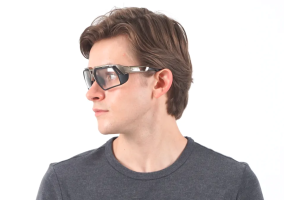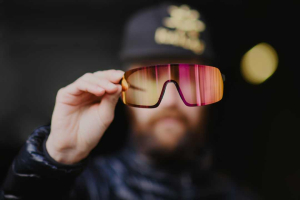
Light conditions can change quickly throughout the day. Moving from indoors to bright sunlight, driving through shaded areas, or spending time outdoors can make switching between clear glasses and sunglasses inconvenient. Photochromic lenses glasses are designed to respond to changing light by adjusting lens tint automatically.
This technology is commonly associated with adaptive or transition lenses. Instead of requiring the wearer to change glasses manually, photochromic lenses react to ultraviolet exposure and become darker in suitable outdoor conditions. Understanding how this process works helps you determine whether adaptive lenses fit your daily needs.
What Are Photochromic Lenses Glasses?
Photochromic lenses are prescription or non-prescription lenses containing light-sensitive compounds that change their optical properties when exposed to ultraviolet radiation. In lower UV conditions, the lenses remain relatively clear. When exposed to sunlight, the compounds undergo a reversible chemical change that causes the lenses to darken.
When UV exposure decreases, the chemical reaction reverses and the lenses gradually return toward their clearer state. The process happens automatically, so the wearer does not need to adjust the lenses manually.
The exact level and speed of tint change depend on the lens technology, temperature, UV exposure, and surrounding environment. This is why photochromic lenses should be viewed as adaptive eyewear rather than as a direct replacement for every type of dedicated sunglasses.
The Basic Process
The technology can be understood in four stages:
UV exposure: Sunlight reaches the photochromic compounds within the lens.
Molecular reaction: The compounds change structure in response to UV radiation.
Lens darkening: The altered compounds absorb more visible light, making the lens appear darker.
Recovery: When UV exposure falls, the compounds gradually return to their original state.
This reaction is reversible and can occur repeatedly throughout the useful life of the lens, although lens performance can vary depending on the specific technology and conditions.
How Do Photochromic Lenses React to Sunlight?
The key trigger for most photochromic lenses is ultraviolet radiation rather than brightness alone. When sufficient UV reaches the lens, the light-sensitive molecules change and increase the lens's absorption of visible light.
This distinction explains why photochromic lenses may not darken equally in every bright environment. A brightly lit indoor space can look intense without producing the same UV exposure as direct sunlight outdoors.
Temperature Also Matters
Temperature can influence how quickly photochromic lenses activate and return to their clearer state. In some technologies, warmer conditions can affect the depth or speed of darkening, while cooler conditions may produce a different response.
The practical takeaway is that adaptive lenses are not mechanical switches. Their transition occurs progressively and depends on the environment. Understanding this helps set realistic expectations about how quickly the lenses will change.
What Happens When You Go Indoors?
When the wearer moves indoors, UV exposure generally drops substantially. The photochromic reaction then begins to reverse, causing the lenses to become clearer.
The lenses do not necessarily return to their clearest state instantly. The recovery period depends on the lens technology and environmental conditions. During this transition, the wearer may notice a gradual change in tint rather than an immediate switch.
This gradual response is one reason adaptive lenses can be useful for people who repeatedly move between indoor and outdoor environments. They reduce the need to carry a second pair solely for moderate changes in light.
Photochromic Lenses vs. Regular Sunglasses
Photochromic lenses and conventional sunglasses address changing light in different ways. Regular sunglasses are already tinted and maintain their designed tint regardless of whether the wearer is indoors or outdoors.
Photochromic lenses, by contrast, adapt to UV exposure. That makes them particularly convenient for people who encounter varying conditions during the day.
Feature | Photochromic Lenses | Regular Sunglasses |
Tint changes automatically | Yes | No |
Clearer indoors | Generally | Usually no |
Darkens outdoors | In response to UV | Already tinted |
Requires switching pairs | Usually not for changing light | Often |
Useful for changing conditions | Yes | Depends on lens choice |
Dedicated sunglass appearance | Not always | Typically |
Neither approach is automatically suitable for every situation. Someone spending extended periods in strong sunlight may prefer dedicated sunglasses, while someone moving frequently between environments may value adaptive convenience.
Are Photochromic Lenses Suitable for Driving?
Driving requires particular attention to how lenses respond inside a vehicle. Many vehicle windshields reduce the amount of UV radiation reaching the wearer, which can limit activation in some photochromic lens technologies.
As a result, a photochromic lens should not automatically be expected to become as dark inside a vehicle as it does outdoors in direct sunlight.
Drivers should consider whether their usual conditions require a dedicated sunglass option. The lens technology, vehicle windshield, lighting conditions, and individual visual needs all affect the practical result.
When Adaptive Lenses Make Sense
Photochromic lenses can be particularly convenient for people who:
Move between indoor and outdoor environments frequently
Want one pair of glasses for varying light conditions
Spend moderate amounts of time outdoors
Prefer not to carry separate glasses
Need prescription correction throughout the day
Experience frequent changes between sunlight and shade
They may be less appropriate when a consistently dark sunglass tint is required for prolonged exposure to intense sunlight.
Photochromic Lenses and Safety Eyewear
Adaptive technology can also be incorporated into protective eyewear. Transition safety glasses combine the convenience of changing lens tint with a safety-oriented frame when the specific product is designed and rated for the relevant workplace requirements.
For workers who regularly move between different lighting conditions, adaptive eyewear can make visual transitions more manageable. Understanding how transition safety glasses improve comfort and visibility is particularly useful when evaluating eyewear for environments where lighting can change throughout the day.
However, photochromic capability does not itself establish impact protection or compliance with a particular safety standard. Those characteristics must be evaluated separately using the product's documented markings and specifications.
For occupational use, always consider the actual hazard first. Flying particles, chemical exposure, dust, optical radiation, and other hazards can require different forms of eye protection.
Conclusion
Photochromic lenses glasses work through a reversible chemical reaction triggered primarily by ultraviolet exposure. The light-sensitive compounds change structure in sunlight, increasing the lens's absorption of visible light and causing it to darken. When UV exposure decreases, the reaction reverses, and the lenses become clearer.
Their main advantage is convenience in changing conditions, but they are not identical to dedicated sunglasses or automatically suitable for every safety application. Consider sunlight exposure, driving conditions, workplace hazards, prescription needs, lens performance, and frame fit before choosing adaptive eyewear.