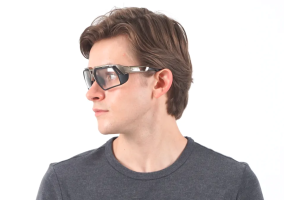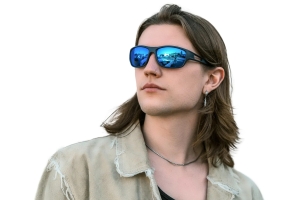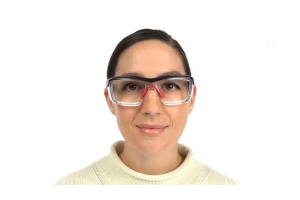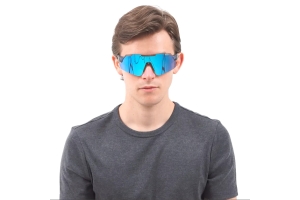
Riding a motorcycle demands absolute focus and precise visual acuity. As optical safety experts, we know that the open road offers unmatched freedom, but it also exposes riders to a variety of severe environmental hazards. Wind, dust, flying debris, and harsh ultraviolet light can critically compromise your vision.
For riders who require corrective lenses, standard everyday eyewear is entirely inadequate and structurally unsafe for highway speeds. Investing in dedicated prescription motorcycle glasses within the early stages of your riding career is a critical safety decision. Proper optical gear ensures that you maintain clear, undistorted vision while fully protecting your eyes during long, demanding journeys.
The Crucial Role of Prescription Motorcycle Glasses
When you travel at highway speeds, the environment interacts with your body much differently than it does inside a closed vehicle. A tiny speck of sand or a small insect instantly becomes a high-velocity projectile. Standard optical frames fail to protect riders for several key reasons:
- Lack of Wrap-Around Geometry: Everyday frames do not contour to the face, leaving large gaps for peripheral wind to enter.
- Tear Evaporation: Constant exposure to moving air causes rapid tear evaporation, leading to dry, irritated, and watery eyes.
- Vision Impairment: Based on extensive rider feedback, this discomfort inevitably results in blurred vision and severe rider fatigue.
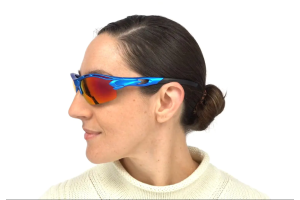
Purpose-built motorcycle glasses solve this problem by utilizing a contoured frame design that closely hugs your facial structure. This specific curvature creates a physical barrier that deflects wind and environmental irritants away from the eyes.
Prioritizing Impact Resistance and Safety Standards
The unpredictable nature of the road means your eyewear must serve as protective armor. Gravel kicked up by the tires of a passing truck can strike your face with significant blunt force. If you are wearing standard glass or basic plastic lenses, this impact can shatter the material and drive sharp fragments directly into your eye.
For guaranteed protection, your eyewear must be constructed from shatterproof materials like aerospace-grade polycarbonate. Understanding safety ratings is paramount for your physical well-being. If you want to verify the durability of your gear, reading about how to tell if your safety glasses meet ANSI Z87 standards will provide absolute clarity on what to look for.
An ANSI Z87 certification guarantees that your prescription motorcycle riding glasses have survived strict high-mass and high-velocity impact testing. This ensures they will shield your eyes rather than causing secondary injuries during an accident.
Essential Features for Prescription Motorcycle Sunglasses
Comfort on a cross-country trip depends heavily on the specific components of your eyewear. When selecting prescription motorcycle sunglasses, prioritize these functional enhancements:
- Closed-Cell Foam Gaskets: These padded linings sit seamlessly between the rigid frame and your skin. They effectively seal off the small gaps where wind and fine dust typically enter. Many modern frame designs offer removable gaskets for easy transition to off-bike wear.
- Polarized Lenses: For daytime travel in bright conditions, polarized lenses are highly recommended. Polarization actively filters out horizontal light waves. This drastically reduces the blinding glare reflecting off asphalt, water, and the metallic hoods of other vehicles.
- Photochromic Transition Lenses: These are an excellent choice for riders who start their journey in the morning and ride well into the night. The lenses automatically darken when exposed to ultraviolet light and return to a clear state in low-light conditions, eliminating the need to pull over and swap eyewear.
Advanced Lens Technology and Coatings
When purchasing prescription motorcycle glasses, riders must also understand how high base curves affect vision correction. Standard lens surfacing on heavily curved, wrap-around frames can cause a distorting visual effect at the peripheral edges. This optical distortion can induce dizziness and negatively alter your peripheral depth perception in heavy traffic.
High-quality optical labs use digital surfacing technology to mathematically calculate and correct the prescription across the entire steep curve of the lens. This provides a widened field of clear, true-to-life vision.
Furthermore, protective lens coatings are essential for maintaining visibility:
- Anti-Fog Coating: Because foam-lined frames restrict airflow, body heat can cause lenses to fog up rapidly at traffic lights. A premium anti-fog coating prevents moisture from condensing on the inner surface.
- Scratch-Resistant Coating: A robust outer coating will prolong the life of your lenses by protecting them from the inevitable abrasive dust that accumulates during a long ride.
Deciding Between Glasses and Prescription Motorcycle Goggles
While standard temple arms work perfectly for most riders, specific riding styles and environments may require a completely sealed approach. When maximum protection from heavy dust and extreme wind turbulence is required, switching to prescription motorcycle goggles is the logical next step.
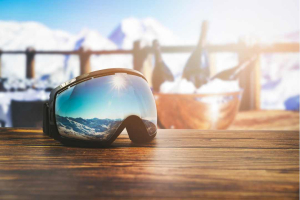
Goggles replace rigid plastic or metal temples with a heavy-duty, adjustable elastic strap. This strap applies even, consistent tension around the head, ensuring the eyewear remains absolutely stationary regardless of intense head movement or buffeting crosswinds. They provide an uncompromising seal and are highly favored by off-road riders, motocross enthusiasts, and cruiser riders who prefer half-helmets.
However, if you wear a tight-fitting full-face helmet, standard frames with thin temple arms are generally much easier to slide on and off.
Achieving the Perfect Fit and Helmet Compatibility
Even the most technologically advanced eyewear is useless if it causes physical pain. Helmet compatibility is the most common issue riders face when selecting new protective gear. Thick, bulky temple arms can create severe pressure points behind the ears when compressed by the internal safety padding of a motorcycle helmet.
To avoid a throbbing headache after two hours on the interstate, follow these fitment guidelines:
- Seek Flexible Materials: Look for frames constructed from flexible, durable materials like TR-90 nylon.
- Choose Low-Profile Temples: Straight, thin temple arms are specifically engineered to slide seamlessly between your head and the helmet liner without pressing into your skull.
- Test With Your Helmet: Always test the fit of your prescription motorcycle glasses while wearing your usual helmet. The frames should rest securely on the bridge of your nose without shifting when you perform over-the-shoulder head checks.
RX Safety Canada: Your Trusted Source for Optical Gear
Acquiring specialized optical equipment requires a trusted provider who understands the strict technical demands of both vision correction and physical protection. RX Safety Canada operates with a singular focus on delivering high-quality, durable vision solutions customized to demanding environments. They offer an extensive selection of ANSI-rated protective eyewear designed explicitly for the rigors of the open road, ensuring you receive gear backed by verified safety ratings and expert optical craftsmanship.
Whether you are navigating a complex mountain pass on a motorcycle or requiring absolute visual clarity in a strict clinical setting, RX Safety Canada ensures that your vision remains sharp, protected, and fully optimized for the task at hand.